


ALBAWABA - The U.S.-Iran war cost both countries a lot, starting with human casualties, a shrinkage in the economy, in addition to the cost of missiles, drones, defense systems and interceptor missiles.
The Financial Times reported that the United States could reconsider how it wages its wars following the latest war with Iran, which posed huge pressure on the American government, especially after the confrontation demonstrated significant military capability and clear operational superiority, without yet leading to a decisive strategic victory.
The American newspaper stressed that the U.S. focused on using long-range strikes, precision weapons, artificial intelligence, advanced aircraft and aircraft carriers, in an attempt to achieve military objectives while minimizing direct human losses as much as possible.
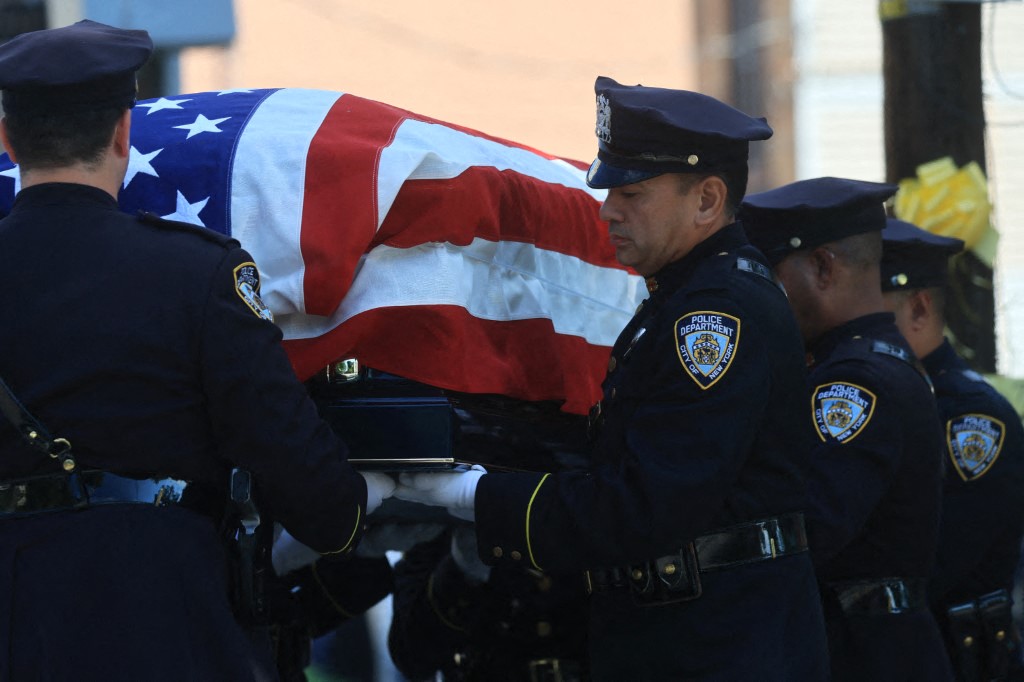
Police officers carry the casket of Army Sgt. Angel Rampersad into the Calvary Assembly of God church during a funeral service for the soldier who was killed in action on July 17 at Muwaffaq Salti Air Base in Jordan on July 31, 2026 in the Queens borough of New York City.
During the war with Tehran, Washington carried out more than 13,000 strikes against Tehran and was able to destroy many of its defense systems, in addition to targeting Iranian Army officials and main personnel.
The U.S. also imposed a blockade targeting Iranian ports and banning shipping in the Strait of Hormuz, with hopes of pressuring Iran to surrender and end the ongoing conflict.
American losses in the Iranian war:
According to the Financial Times, at least 18 American soldiers were killed, and more than 624 others were injured since the start of the war.
Additionally, 42 American aircraft were destroyed or sustained varying degrees of damage, including F-15 and F-35 fighter jets and E-3 bombers, as well as more than 20 Reaper drones.
Financially, the military operations cost approximately $37.5 billion, while the U.S. Department of Defense requires about $67 billion to replenish its weapons stockpiles, which have been depleted due to heavy use during the war, the report continued.